From Paintbrush to Protest
Standing Up for Whales in Hobart
We are bombarded by everything this world faces: images, films, news story after news story. Some days it feels like we can't escape it. Either we get stuck in ignorance, or we hear about issue after issue until we go numb….
Art has the power to break through this. Good news stories told through real connection are met in a different way. When conservation conversations have joy and play as the undertone, they leave hope.
That's what last weekend in Nipaluna / Hobart was all about. It took us from a sold-out whale painting workshop to a celebration of 40 years of whale protection, and all the way to the doors of the International Whaling Commission (IWC).
How can art help with eco-anxiety?
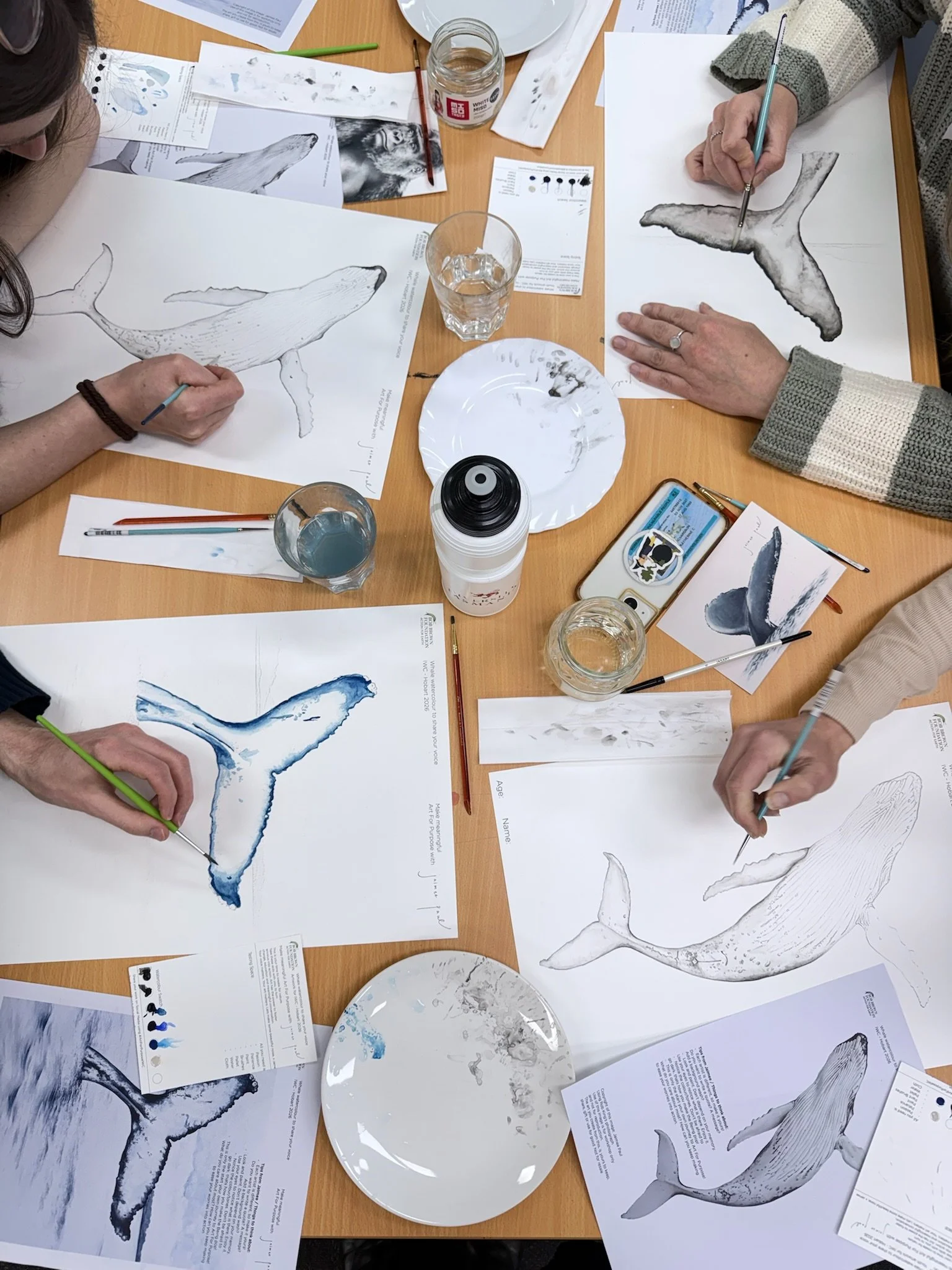
When your hands are busy creating, you can take in a hard issue without being swallowed by it. That's why I ran a whale watercolour workshop with Bob Brown Foundation: to show how our creations can turn the feeling of eco-anxiety into action.
It sold out. Twenty of us filled the room: women, men and kids. At one point the kids dressed as penguins. It was very special.
While everyone was in flow, painting their humpback whales, Briony from BBF shared the work the Foundation has been doing in Antarctica. We had something to ground ourselves, something to channel our awareness into. People told me that helped them connect to the issue on a deeper level, but without the hopelessness.
What was the International Whale Celebration in Hobart?
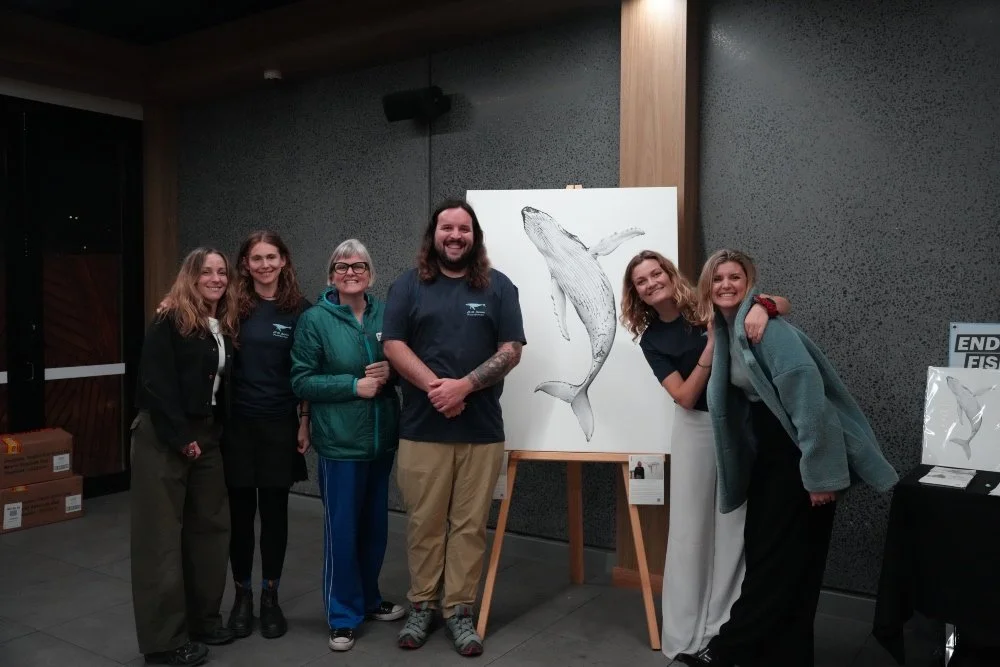
The International Whale Celebration was a free public event in Hobart on Saturday 26 September 2026. It marked 40 years since the global moratorium on commercial whaling, as the 70th meeting of the International Whaling Commission came to town. Marine conservationists, artists, musicians and the public gathered to honour four decades of whale protection.
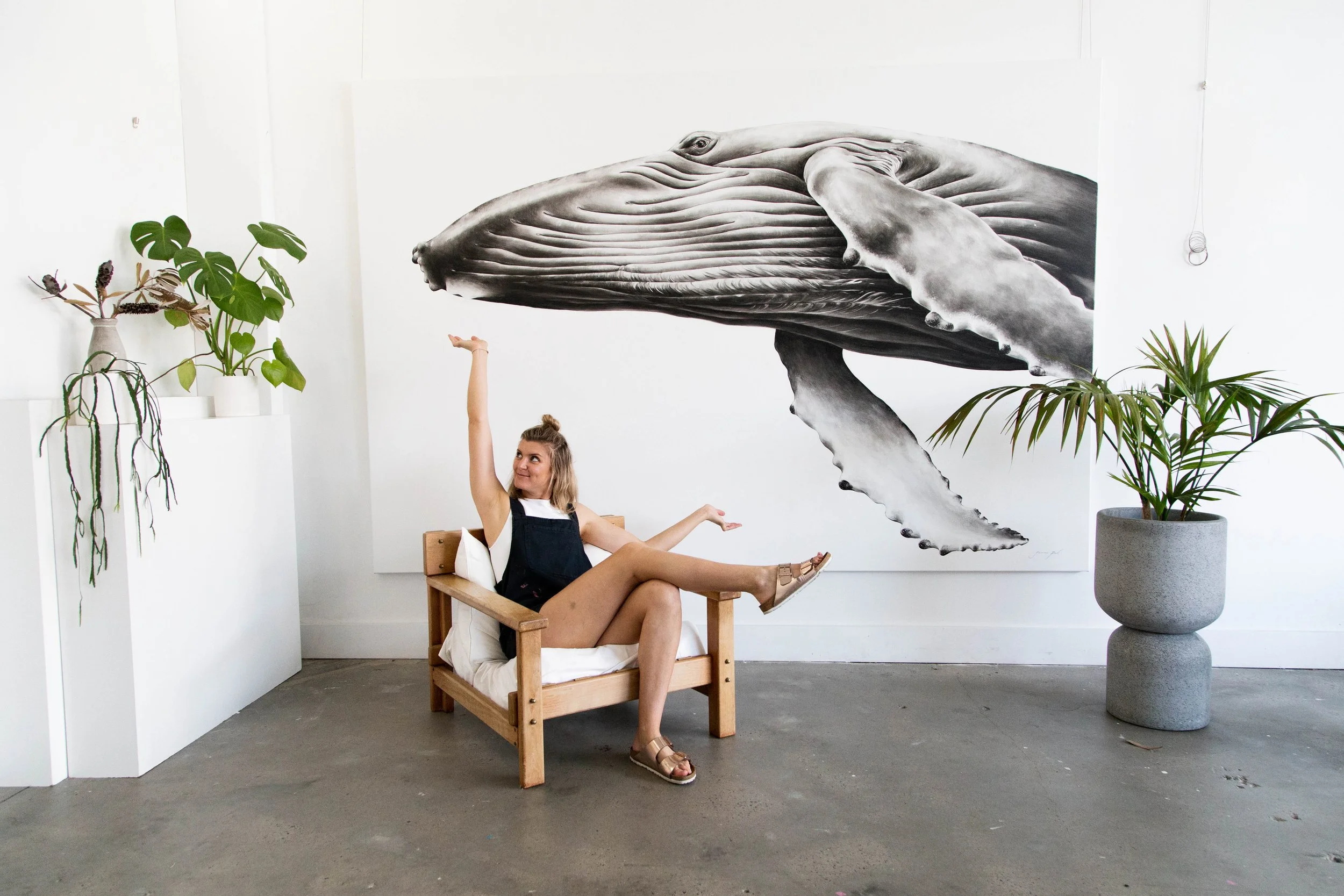
The two kids who joined the workshop were at the event, and they curated and set up my students' whales on the wall, next to my big print. Seeing the beauty of their art beside images of krill fishing ships, and watching people engage with the issue, made it all worth it. I felt so proud.
Why did people protest at the International Whaling Commission in Hobart?
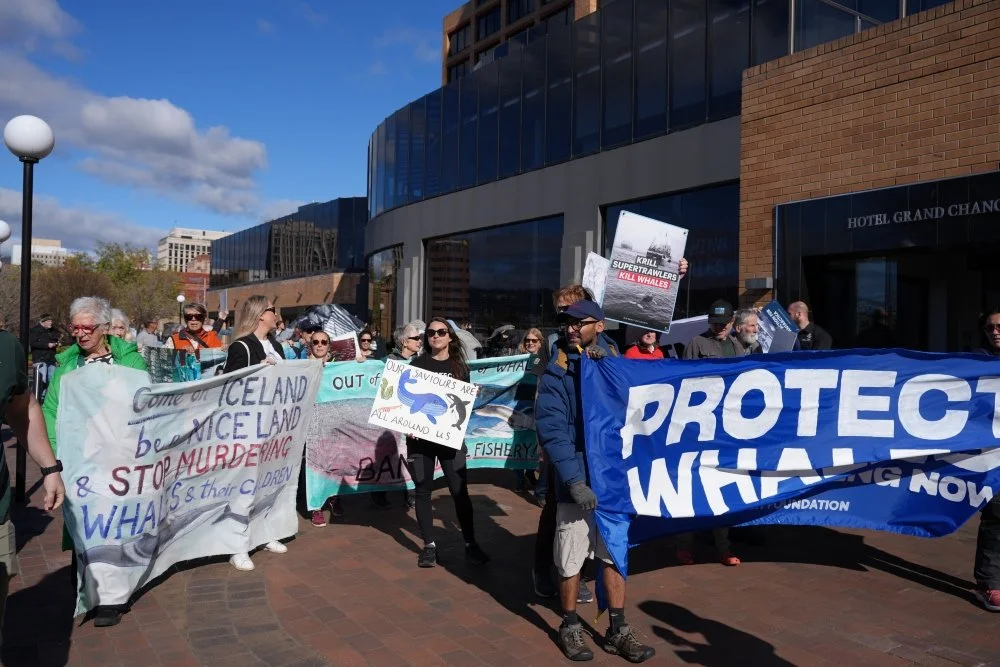
Protesters gathered to call on Australia to do more to protect whales, including ending whaling and banning krill fishing. Forty years after the ban on commercial whaling, whales are still being killed by whaling from Iceland, Norway and Japan. Now they face a new threat: krill supertrawlers taking their food in Antarctic waters.
On Monday morning, I ended up on the megaphone, and on Channel 7 news
It felt proud and calm. I stood beside posters that have been used since the 1980s by Mick McIntyre and Howie Cooke, Australian protesters who have followed the IWC ever since.
I create to be part of something bigger than myself. I paint to speak for nature. To stand where the decisions are being made, and use my voice as well as my brush, is the reason I do what I do.
The most moving moment was seeing a few of my workshop students there, holding up the whales they'd painted two days earlier and chanting "We are complaining - no more whaling"
There was hope, too. Delegates heading into the conference stopped to thank us for being there. They said they'd do their best to carry the message inside. A group had travelled all the way from Iceland to share that not everyone in Iceland agrees with what a few are doing.
Why is krill fishing bad for whales?
Krill are tiny crustaceans at the heart of the Antarctic ecosystem, and they're the main food of many whales. Industrial supertrawlers are hauling them out of Antarctic waters, often right where whales are feeding, and whales have died after becoming entangled in their nets.
Krill fishing is the new whaling. It's taking the food from growing populations of whales. It's so unnecessary.
Much of it ends up in things we don't need, like krill oil supplements. There are alternatives. We have the power, from our pocket to our mouth.
How can I help protect whales right now?
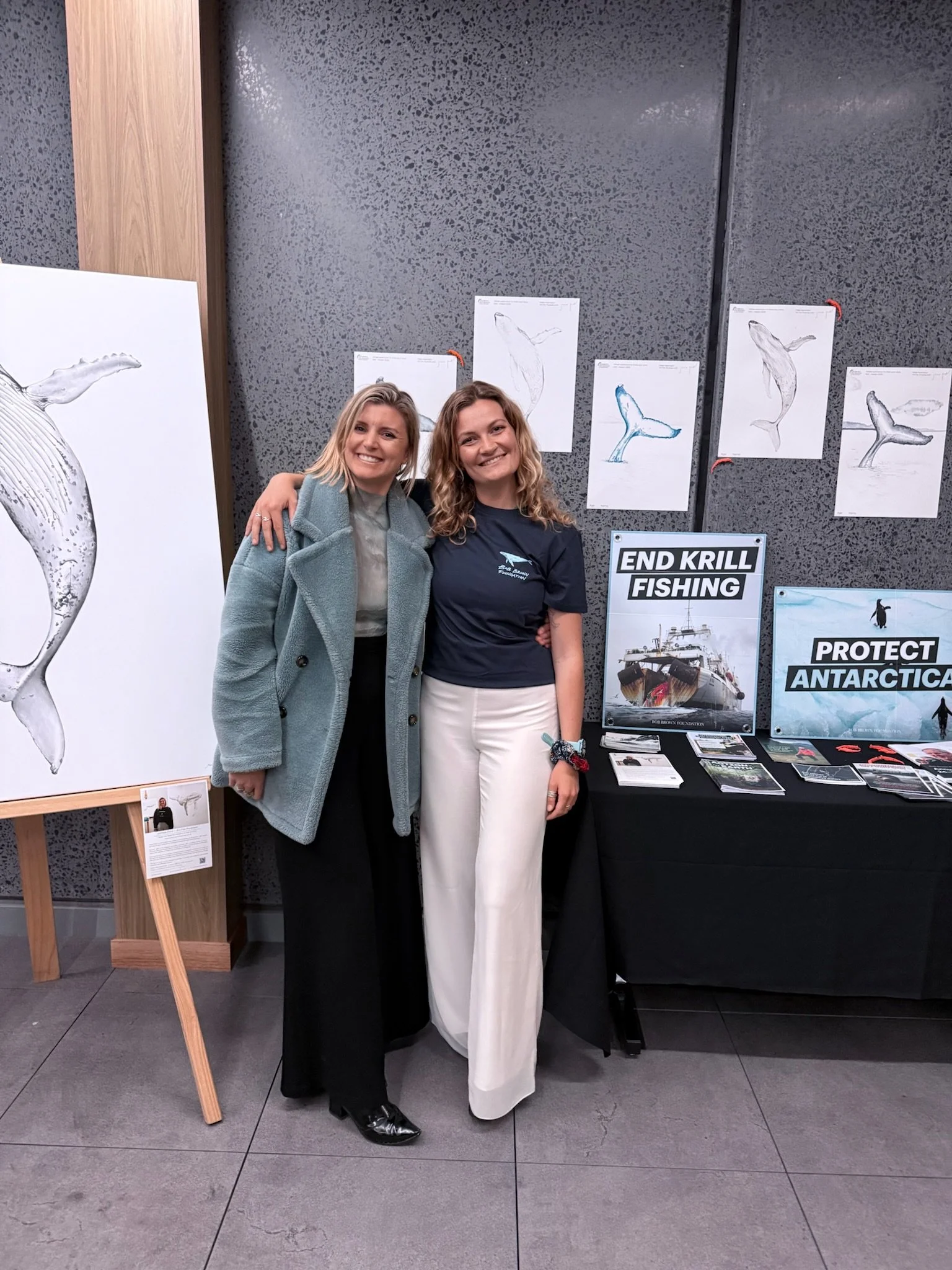
Start with what you buy, then add your voice.
Check the label. Skip krill oil supplements, and check what's in your pet food.
Add your voice. Bob Brown Foundation is asking Swisse to stop selling krill oil. You can take action here by signing their petition and giving whales a voice: swissekrills.org
Together, we can make a difference x
Frequently asked questions
When was commercial whaling banned?
The International Whaling Commission's moratorium on commercial whaling came into effect in 1986, so 2026 marks 40 years of the ban. Despite it, whaling continues in Iceland, Norway and Japan.
What is the International Whaling Commission?
The International Whaling Commission (IWC) is the global body responsible for the conservation of whales and the management of whaling. It was set up in 1946, and its member countries meet every two years. The 70th meeting was held in Hobart from 27 September to 3 October 2026.
Is krill oil sustainable?
Bob Brown Foundation argues it isn't. Its campaign says much of the Antarctic krill catch goes to supplements, taken by supertrawlers working in the feeding grounds of whales, penguins and seals. Krill is the foundation of the Antarctic food web, so every tonne taken is food taken from wildlife. [link to BBF source]
Are whale populations recovering?
Yes, and humpbacks are one of conservation's great success stories. When whaling stopped off Australia's east coast in the early 1960s, only a few hundred humpbacks were left. Today they number in the tens of thousands.
That recovery didn't happen by chance. It happened because people spoke up. Ordinary voices, raised together through the "Save the Whales" movement of the 1970s and 80s, helped win the moratorium and change the course of history for whales. Every humpback we see migrating along our coast today is proof that when we speak up, the world listens.
Now whales need our voices again. Krill fishing is the new whaling, and by speaking up today we can protect the food they need to keep coming back.
If whales could speak, I think they'd say: thank you for giving us a voice
"Do the best you can until you know better. Then when you know better, do better." — Maya Angelou
I'm so excited to channel this weekend into my upcoming whale exhibition. [Join the waitlist to be the first to know when it opens.]
Jaimee Paul is an Australian wildlife artist working in partnership with Bob Brown Foundation. Through Art For Purpose, a portion of her print sales supports conservation campaigns.